 how-to
How to Build a Home Maintenance Plan That Actually Works
Last Updated: October 29, 2026
Quick Summary
A home maintenance plan is a written schedule of the inspections, service tasks, and repairs a house needs over a year, organized by season and by system. Build a checklist by system and by room, then give every task a frequency, a due month, and an owner so the list becomes a calendar.
- Sort tasks by safety risk first, then risk of further damage, then cost of waiting.
- Test smoke and carbon monoxide alarms monthly and check visible leaks monthly.
- Tag each task as DIY or pro so you can compare quotes before it comes due.
- Do not buy scheduling software before you have a written checklist in place.
- A maintenance log records date, provider, cost, warranty terms, and findings for each job.
Table of Contents
- Why a Home Maintenance Plan Beats Reactive Repairs
- What Belongs on Your Home Maintenance Checklist
- Your Seasonal Home Maintenance Checklist, Quarter by Quarter
- How to Set a Home Maintenance Schedule and Task Frequency
- Prioritizing Repairs and Budgeting for the Year
- Using a Home Maintenance Log Template to Track Service History
- When a Home Maintenance App or Scheduling Software Earns Its Place
- Finding Local Professionals for the Jobs You Should Not DIY
- Frequently Asked Questions
Why a Home Maintenance Plan Beats Reactive Repairs
A home maintenance plan is a written schedule of the inspections, service tasks, and repairs a house needs over a year, organized by season and by system.
The math is simple.
Planning also changes how you hire. A furnace tune-up on a September calendar lets you compare local HVAC companies calmly; a furnace that dies in January means calling whoever answers.
What Belongs on Your Home Maintenance Checklist
A home maintenance checklist covers every system and surface in the house, not just the obvious ones. Build the list twice, once by system, once by room, and cross-check the two views to catch tasks that fall between categories.
Systems and structure: roof, plumbing, electrical, HVAC
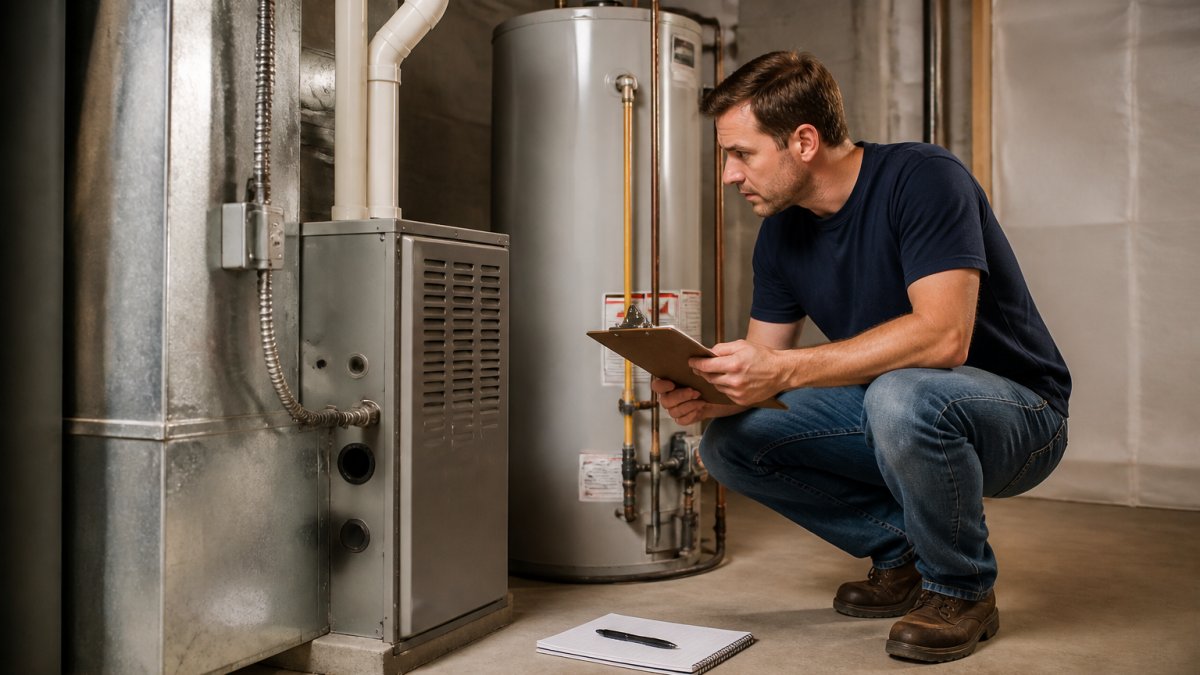
Start with the systems that cause the most expensive damage when they fail. For each one, the checklist should name the specific inspection point, not just the system.
- Roof and attic: check shingles, flashing, and valleys after storms; look for granules in gutters and daylight through the roof deck; confirm attic insulation is dry and vents are clear; inspect chimney flashing and cap.
- Plumbing: test every shutoff valve; look for under-sink and behind-appliance leaks; flush the water heater annually; check supply hoses for bulges; confirm the sump pump runs before the wet season; label the main shutoff.
- Electrical: test ground-fault and arc-fault outlets; watch for warm faceplates, flickering lights, or a panel that trips repeatedly; keep the panel area clear; check outdoor outlet covers; note panel age and any aluminum wiring for professional review.
Room-by-room inventory: the tasks that hide
A system list misses the room-level items that only show up when you stand in the space. Walk each room once a year with the checklist in hand.
- Kitchen: vacuum refrigerator coils; run the dishwasher cleaning cycle; check the ice maker line for leaks; test the range hood fan; look under the sink for moisture.
- Bathrooms: check caulk and grout at tubs and showers; test the exhaust fan; look for water stains on ceilings below; check toilet supply lines and fill valves.
- Laundry room: clean the lint trap and the full dryer vent run; check washer hoses; confirm the vent flap opens freely.
Adjust the list for your house, not the average house
A checklist is a starting template, not a fixed script. Three variables change what belongs on yours:
- Climate: in colder regions, exterior tasks move earlier and pipe freeze protection becomes a fall priority; in wet coastal climates, drainage, caulking, and roof inspections deserve more frequent slots.
- Home age and materials: older homes need more electrical and plumbing inspection; homes with mature trees need gutters cleared more often; wood siding or decks need more frequent sealing.
- Equipment: a sump pump, septic system, well, pool, or wood stove each adds its own inspection points and checklist lines.
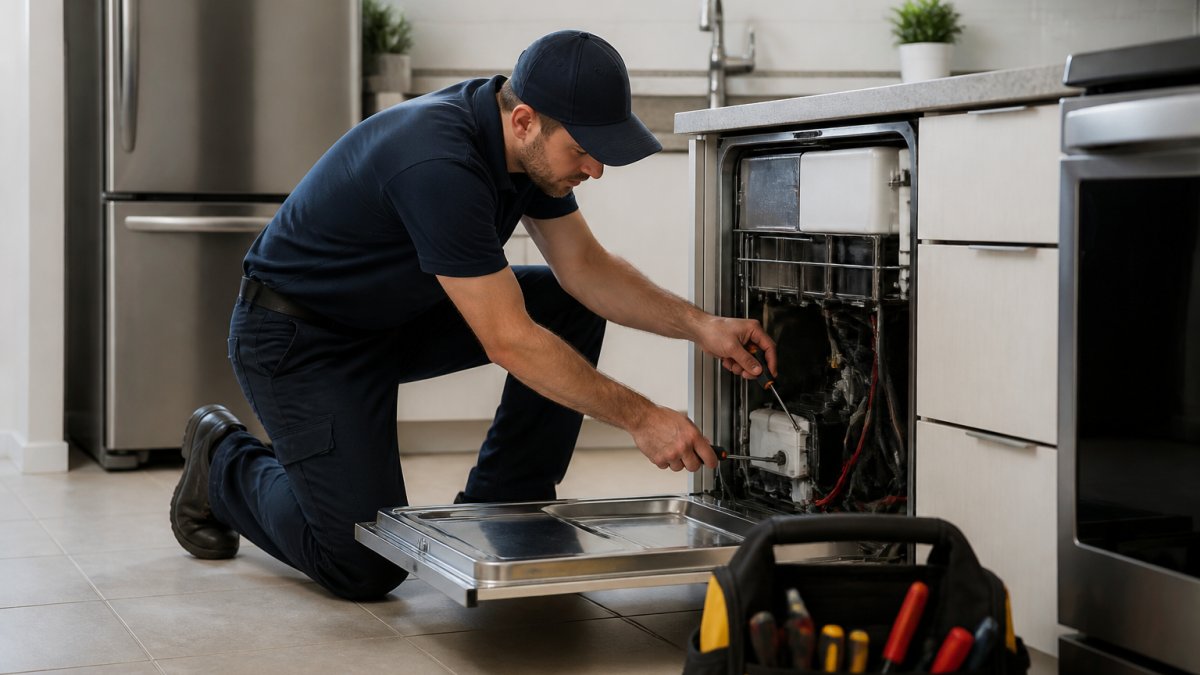
If you are unsure whether an appliance needs a professional or a DIY fix, our guide to the signs your appliances need professional repair service walks through the warning signals worth acting on.
Your Seasonal Home Maintenance Checklist, Quarter by Quarter
A seasonal home maintenance checklist splits the year into four blocks, and that structure works because the tasks follow the weather. Here is the rotation we recommend.
Season | Focus | Key Tasks |
|---|---|---|
Spring | Water and exterior | Clear gutters, check grading, inspect roof after thaw, test outdoor taps |
Summer | Cooling and exterior surfaces | Service AC, stain decks, wash siding, check window seals |
Fall | Heating and weatherproofing | Furnace tune-up, drain outdoor lines, seal gaps, book any electrical inspection |
Winter | Indoor safety | Test alarms, watch for ice dams, check pipes in cold zones, plan next year's budget |
Two adjustments matter. In colder regions, move exterior tasks earlier and be realistic about what you can do once the ground freezes. If you plan to book an electrical safety check this fall, our breakdown of what a residential electrical safety inspection involves explains what the visit covers.
How to Set a Home Maintenance Schedule and Task Frequency
The best home maintenance schedule assigns every task a frequency, a fixed month, and an owner, then repeats it. Frequency is the part most people guess at, and guessing is why tasks slip. A workable schedule also answers which tasks come first when time or money is short, and which ones you should not attempt yourself.
Start with a frequency framework
A practical starting point, adjusted for your house:
- Monthly: HVAC filters, smoke and carbon monoxide alarm tests, visible leak checks, dryer lint trap.
- Quarterly: HVAC filter swap if needed, water heater flush check, exterior walkaround, sump pump test in wet seasons.
- Twice a year: gutters and downspouts, caulking inspection, alarm battery check, weatherstripping review.
Adjust for your house, not the average house. A home with mature trees needs gutters cleared more often; a house with a sump pump needs it tested before the wet season. Write the frequency next to each task, then pick the month it belongs in, that single step turns a list into a calendar.
Prioritize by risk, urgency, and cost of waiting
When the list is longer than your time or budget, sort every task through three filters, in this order:
- Safety risk: anything touching gas, electrical panels, structural movement, or carbon monoxide goes first, every time.
- Risk of further damage: water intrusion, a failing seal, or a blocked drain compounds. A small leak today becomes a ceiling, a drywall repair, and an insurance claim later.
- Cost of waiting: roof flashing, caulking, and water heater sediment get more expensive the longer they sit; cosmetic paint is stable. Spend on the compounding ones first.
Decide DIY versus professional before you schedule
Some jobs are genuinely DIY: filters, caulking, alarm tests, gutter clearing on a single-story home, and visual inspections. Gas work, panel-level electrical work, roof work above a safe height, and structural changes belong with a licensed professional. Tag each task as DIY, pro, or either in the schedule itself, so when a pro task comes due you already know to start comparing quotes.
Use a reusable template with the right fields
A software-neutral template works for paper, a spreadsheet, or an app. Give every task these fields:
Home Renovation Services in Edmonton →
- Task and system or room
- Frequency and due month
- Owner (who in the household is responsible)
That template doubles as your maintenance log, so the schedule and service history live in one place. A phone alert or calendar entry on the first of the month is enough for most households. The point is not the tool; it is that the task has a due date, an owner, and a decision already made about who does the work.
Prioritizing Repairs and Budgeting for the Year
Budgeting works better as a sinking fund than as a single annual lump. Set aside a monthly amount for routine upkeep and a separate reserve for larger replacements. Tracking last year's spending makes next year's estimate more accurate, and a reserve smooths the spikes that uneven maintenance costs create.
Watch out: deferring a small leak or a failing seal is a common budgeting mistake. The repair does not disappear; it moves to a more expensive category.
Using a Home Maintenance Log Template to Track Service History
A home maintenance log template is a simple record of what was done, when, by whom, and what it cost. Paper or digital, the format matters less than the habit.
Include these fields for every job:
- Date and task performed
- Who did the work, with contact details
- Parts or materials used
That log becomes your service history, and it pays off in warranty claims, resale disclosure, and repeat bookings. For a deeper system, this guide on the best way to track home maintenance covers the options.
When a Home Maintenance App or Scheduling Software Earns Its Place
Home maintenance scheduling software earns its place when the calendar, the records, and the service providers start living in different places.
Here is a comparison of common options homeowners consider.
Tool | Best For | Standout Feature | Watch Out For |
|---|---|---|---|
MyProBook | Connecting tasks to local pros | Save trusted providers and rebook | Not a repair-history database |
HomeZada | Reminders plus cost forecasting | Five-year maintenance forecast | Plan pricing not published |
HomeKeep | Guided self-directed plans | Step-by-step task guidance | Pricing not published |
HomeBeacon | Equipment tracking | Seasonal reminders | Limited verified detail |
GigNGo | Free checklist users | Free repair and upgrade tracking | Paid tiers unverified |
Cozi | Shared family calendars | Shared household schedule | Not maintenance-specific |
MyProBook is a local service-provider platform where you can request and compare multiple quotes, book and track a job, and save the professionals you trust to a personal ProBook for rebooking. You can see how it handles multi-provider work on the project planning tools page.
Watch out: do not buy software before you have a written checklist. A tool cannot organize tasks you have not defined.
Finding Local Professionals for the Jobs You Should Not DIY
When you reach that point, the goal shifts from "I need a service" to "I need the right professional." Ask three questions of every provider: Are you licensed for this work? Can you give a written quote with the scope spelled out? What is your availability if something goes wrong after the job?
Comparing two or three quotes is the single best protection against overpaying or hiring the wrong trade. If you are ready to hire for exterior work, you can find exterior repair professionals in Edmonton and connect with local experts directly.
Frequently Asked Questions
How do I create a home maintenance schedule that I will actually follow?
Start with the systems that cause the most damage when they fail: roof, plumbing, electrical, and HVAC. List every task, assign it a frequency (monthly, quarterly, seasonal, annual), and anchor it to a trigger you already notice, such as the first cold snap or the start of daylight saving. Set reminders in a calendar or a home maintenance app so due dates surface automatically. Group tasks by month rather than doing everything at once, and keep the list to a manageable size so it stays realistic.
What is the best way to track home maintenance and service records?
A home maintenance log template should capture the date, the task, who did the work, what it cost, and any warranty or receipt details. Keep one record per system so you can see the full history of your furnace, roof, or appliances at a glance. Digital tools make this easier because you can attach photos, receipts, and inspection findings to each entry. A clear service history helps when you sell, when you make a warranty claim, or when a new technician needs context.
Can home maintenance scheduling software send recurring reminders?
Yes. Most home maintenance scheduling software lets you set a recurring task with a frequency and a due date, then sends notifications by email or push alert when it comes up. Some tools add seasonal reminders automatically based on your climate. The value is consistency: reminders remove the need to remember when the furnace filter was last changed or when the gutters were cleared. Look for a tool that also stores service history so the reminder and the record live in the same place.
When should I hire a professional instead of doing a maintenance task myself?
Call a licensed professional for anything involving gas, the electrical panel, structural work, roofing at height, or work that could affect your home insurance or warranty. In most provinces, gas work and certain electrical work must be done by a licensed tradesperson. DIY is reasonable for filter changes, caulking, gutter clearing from the ground, and similar low-risk upkeep. If a task feels risky or you are unsure about code requirements, hire a local professional and keep the invoice in your maintenance records.
The challenge is not knowing that maintenance matters. It is keeping the plan, the records, and the right local professionals in one place when life gets busy. MyProBook helps homeowners connect with local service providers, compare quotes side by side, and keep trusted trades saved for the next job. Get started with MyProBook and turn your maintenance list into booked, tracked work.