 blog
Residential Electrical Safety Inspection Cost 2026
Table of Contents
- What Drives Residential Electrical Safety Inspection Cost in 2026
- What Does an Electrical Safety Inspection Include?
- Electrical Inspection vs. Permit Inspection: Two Different Costs
- How Long Does an Electrical Inspection Take?
- Questions to Ask an Electrician Before Booking
- Comparing Quotes and Finding a Local Electrician
- Frequently Asked Questions
Last Updated: October 12, 2026
What Drives Residential Electrical Safety Inspection Cost in 2026
The residential electrical safety inspection cost in 2026 isn't one number. It's a range shaped by your home's size, age, wiring, and how much of the system the electrician can reach. Homeowners can sort through quotes from local electricians to see what's driving the price before they book.
Most homeowners expect a flat fee. An inspection is priced like a service call, not a product on a shelf.
Home Size, Age, and Wiring Type
Bigger homes take longer. More rooms mean more outlets, switches, fixtures, and circuits to check. Square footage is one of the simplest cost drivers an electrician will ask about.
Age matters just as much. Older homes often have wiring that takes longer to inspect and document, and knob-and-tube or aluminum branch wiring needs closer attention than modern copper.
Wiring type changes the work. A home with an updated panel and grounded circuits is a faster inspection than one with mixed generations of wiring behind the walls.
Inspection Scope and Access
Scope decides the price more than anything else. A quick visual panel check is not the same job as a full property inspection with every outlet tested.
Access is the hidden cost. Finished basements, sealed ceilings, and crowded attics slow an electrician down. Time is the fee.
What Does an Electrical Safety Inspection Include?
An electrical safety inspection is a documented review of a home's electrical system, panel, wiring, outlets, fixtures, and grounding, with a written summary of any hazards found.
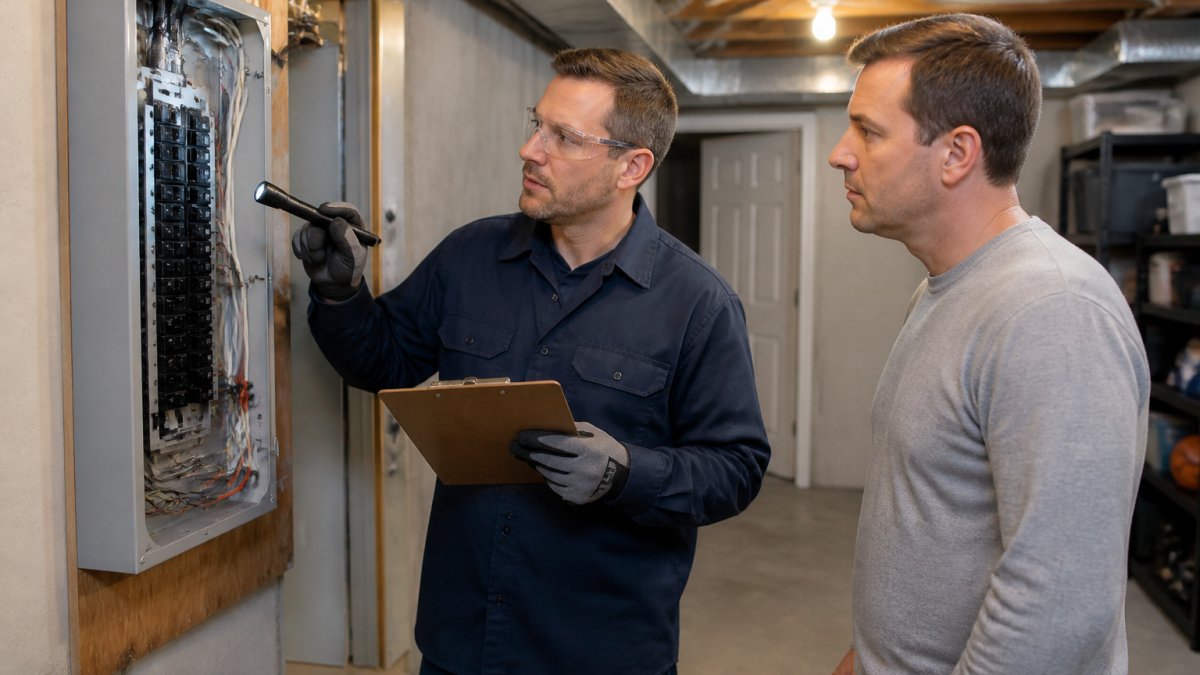
Here's what a standard inspection covers:
- Electrical panel: breaker condition, labeling, and signs of overheating
- Residential wiring: visible runs, connections, and any damaged insulation
- Outlets and switches: testing for function, grounding, and loose connections
- Lighting installation points: fixture connections and any DIY work
- Grounding and bonding: the safety path for fault current
- GFCI protection: testing where required near water
The inspection ends with results in writing. That report is the real deliverable: it tells you what's safe, what needs corrective work, and what can wait.
The report is only as good as the access you give. Clear the area around your panel and any crowded storage before the visit, it saves time, and time is the fee.
Electrical Inspection vs. Permit Inspection: Two Different Costs
These are two different services with two different pricing models, and mixing them up is the most common mistake homeowners make.
A permit inspection is tied to electrical work.
A private safety inspection is voluntary. You book it to assess an existing electrical system, often before buying a home, after an unpermitted renovation, when an insurer asks, or because the home is decades old and has never been reviewed.
Feature | Private Safety Inspection | Permit Inspection |
|---|---|---|
Who requires it | You choose it | The municipality |
When it applies | Existing residence, pre-purchase, insurance request, peace of mind | New electrical work, renovation, service upgrade, or panel change |
Who inspects | A licensed electrician you hire | The local authority having jurisdiction |
What you get | A written report of findings and recommended corrections | Sign-off (or deficiency notice) on the permitted work only |
How the fee is set | By the electrician, based on scope and time | By the municipality's published fee schedule, often scaled to work value |
What the fee covers | The inspection visit and the report | A set number of inspection visits tied to the permit |
Re-inspection | Not typically applicable, you book follow-ups as needed | Charged separately if the work fails and a return visit is required |
How Permit Fees and Re-Inspection Charges Actually Work
Municipal permit fees are published documents, not negotiated prices. They are usually structured one of three ways: a flat fee for a defined scope (for example, a residential service upgrade), a tiered fee that rises with the declared value of the work, or a base fee plus a per-fixture or per-circuit add-on.
The part homeowners miss is the re-inspection fee. If the AHJ finds deficiencies, an improperly bonded panel, missing GFCI protection, unprotected cable runs, the work must be corrected and re-inspected.
Why the Two Are Not Interchangeable
A permit inspection answers one question: does this specific permitted work meet the electrical code? A private safety inspection answers a different one: is the existing system safe and code-compliant as a whole? A homeowner renovating a kitchen may need both.
When you request quotes for a private safety inspection, ask the electrician to state plainly whether the fee covers a whole-home review or a specific system, and whether any follow-up visit after corrective work is included or billed separately. That single clarification prevents most billing disputes.
How Long Does an Electrical Inspection Take?
A residential electrical inspection usually takes one to three hours, depending on home size, age, and how much of the system is accessible. A small, newer home with an updated panel sits at the low end; a large older home with limited access sits at the high end. Ask about duration when you book, it tells you how thorough the visit will be and whether the quote is realistic.
Find a Licensed Electrician in Edmonton →
A few things stretch the time:
- Multiple panels or a subpanel to check
- Crowded, sealed, or finished access points
- A long list of outlets and fixtures to test
- Older residential wiring that needs closer review
- A written report that documents each finding rather than a verbal summary
If a quote promises a full property inspection in twenty minutes, ask what is actually being checked. Speed is not the goal here. Coverage is.
When Should You Actually Book an Inspection?
Duration and price only matter once you know whether you need the inspection at all. Here are the situations where booking one is usually the right call:
- You are buying a home. A general home inspection often flags electrical concerns but does not test the system in depth. A private safety inspection gives you a documented list of deficiencies you can use to negotiate or budget for repairs.
- Your home is older. Homes with knob-and-tube wiring, aluminum branch circuits, or a fuse panel instead of breakers carry known risks. An inspection establishes what is actually present behind the walls.
- You are renovating. If you are adding circuits, finishing a basement, or upgrading a service, a pre-work inspection identifies what needs correcting before the new work is permitted and inspected.
- Your insurer asked. Some insurers request documentation of the electrical system's condition, especially for older homes or after a claim. A written inspection report is the usual deliverable.
- You have recurring symptoms. Breakers that trip repeatedly, warm outlets, flickering lights, or a faint burning smell are reasons to book an inspection rather than wait.
- It has been decades. If no one has reviewed the electrical system since the home was built or last renovated, a periodic safety inspection is a reasonable precaution.
From Findings to Repairs: How Follow-Up Costs Accumulate
The inspection report is the starting point, not the finish line. Common deficiencies include an overloaded or unlabeled panel, missing GFCI protection near water, ungrounded outlets, double-tapped breakers, and deteriorated insulation on older wiring. Each has a corrective cost, separate from the inspection fee.
A typical sequence: the inspection identifies deficiencies, the electrician quotes corrective work, you decide what to fix now versus later, and if the work requires a permit, the municipality inspects it and may charge a re-inspection fee if the first pass fails.
Matching the Inspection to Your Situation
The right inspection depends on why you are booking it. A pre-purchase review should be thorough and documented, since you will use the report in a negotiation. A periodic safety check on a home you own can be scoped more narrowly. A pre-renovation inspection should focus on the circuits and panel the new work will touch. Tell the electrician your reason up front, it shapes the scope, duration, and fee, and prevents you from paying for coverage you do not need.
Questions to Ask an Electrician Before Booking
The right questions save you from surprise charges. Here are the ones we'd ask before booking any electrical inspection.
- What's included in the inspection scope?
- Is this a panel check or a full property review?
- Will I get a written report of findings?
- What's your fee, and is it flat or hourly?
- Do you charge a separate re-inspection fee if I book corrective work?
- Are you licensed, and can I see the number?
- How soon can you schedule an inspection appointment?
That last one matters if you're on a deadline, like a home purchase. Availability varies by season and by how busy local electricians are.
Comparing Quotes and Finding a Local Electrician
Comparing quotes is where homeowners win or lose. The cheapest quote often covers the least. The most expensive one isn't automatically the most thorough.
A cost estimate should tell you three things: what's inspected, how long it takes, and what the fee covers. If any are missing, ask.
Here's how we'd compare quotes side by side:
- Scope: full property or specific system only?
- Report: written findings included, or verbal only?
- Fee: flat rate or hourly, and what's excluded?
- Availability: how soon can they book?
- Repairs: do they handle corrective work, and at what rate?
This is exactly the kind of comparison MyProBook is built for.
Electrical safety guidance for homeowners
Once you've picked a provider, confirm the inspection appointment in writing. Keep the report with your home records. It's useful when you sell, insure, or renovate.
Frequently Asked Questions
How much does a residential electrical safety inspection cost in 2026?
There is no single national figure. Electrical inspection cost depends on your home's size and age, how much of the wiring is accessible, whether the panel needs opening, and how many circuits get tested. Municipal or provincial permit fees are separate from the electrician's labour. Because rates vary by city and by provider, request quotes from two or three local electricians and compare what each one includes before you commit.
What is the difference between an electrical safety inspection and a permit inspection?
An electrical safety inspection is a voluntary or condition-driven review of an existing residence, often requested at purchase, after a flood, or when a homeowner wants reassurance. A permit inspection is tied to electrical work that requires a permit, such as a panel upgrade or new outlet installation. The permit fee is set by the local inspection jurisdiction, and the number of inspections included in a permit depends on the scope of the electrical project.
How often should I have an electrical inspection?
There is no fixed schedule that applies to every home. Many homeowners book one when buying or selling, after major electrical repairs, following water damage, or when a home is 25 to 40 years old and the wiring has never been assessed. If your electrical panel is a known older model or you have added high-draw appliances, an inspection can help flag code compliance issues before they become repair costs.
How can I compare quotes from residential electricians?
Ask each electrician to break down the inspection scope, the estimated duration, whether the panel and attic are included, and whether the quote covers a written report. Confirm whether permit fees, taxes, and any re-inspection fee are separate. A platform that lets you request and compare quotes side by side, such as MyProBook, saves you from calling providers one at a time and helps you see what each quote actually covers.
A residential electrical safety inspection is one of those costs you can't pin to a single number, because scope, home size, and access all move it. The smart move is to compare quotes on what they actually cover, not just the bottom line. MyProBook makes that easy: request multiple quotes from local electricians, compare them side by side, check reviews, and book the provider you trust, all in one place. Get started with MyProBook and find a local electrician you can rely on.