 how-to
What to Ask Before Hiring a Pressure Washing Company
Table of Contents
- Questions About Licensing and Business Credentials
- Verify Insurance and Liability Coverage
- Ask About Experience and Years in Business
- Pressure Washing Contractor Checklist: References and Past Work
- Pressure Washing Quote Checklist: What a Written Estimate Should Include
- Pressure Washing Safety Precautions and Equipment
- Pressure Washing Preparation Checklist: Property Access and Surface Protection
- Red Flags and How to Decide
- Frequently Asked Questions
Last Updated: October 6, 2026
Questions About Licensing and Business Credentials
Before hiring a pressure washing company, verify the contractor holds all required licenses for your area. Ask directly: "Are you licensed to operate a pressure washing business?" Request proof of a current business license and any industry-specific certifications.
Many pressure washing companies operate legitimately without formal licenses in some regions, but others require them. Don't assume, ask, and expect documentation without hesitation.
Key credentials to verify:
- Current business license from local authorities
- Industry certifications (pressure washing associations or training programs)
- Proof of bonding if required in your area
- Any specialized certifications for specific surfaces (roof cleaning, soft washing)
Ask how long they've been licensed and whether their credentials are in good standing. Vagueness is a red flag.
Verify Insurance and Liability Coverage
This is the step most homeowners rush, and it matters most. Asking "do you have insurance?" proves nothing. What protects you is confirming, in writing, that a live policy exists and responds if something goes wrong on your property.
Start with the right question: "Can you email me a Certificate of Insurance (COI) before the job starts?" A COI is a one-page summary from the insurer or broker showing the named insured, policy type, coverage limits, effective dates, and insurer contact details.
What to actually read on the certificate
- Named insured, the business name should match the estimate and invoice. A sole proprietor under a personal name is fine, but any mismatch should be explained.
- General liability limits, look for a per-occurrence and an aggregate limit. What matters is whether it covers the worst realistic outcome on your property (a cracked window, damaged siding, a flooded basement).
- Policy period, the effective and expiration dates must cover your scheduled job date. A certificate that expired last month tells you nothing about today.
- Description of operations, some certificates list the specific work covered (for example, "exterior cleaning, soft washing, pressure washing"). If your job isn't listed, ask.
How to verify the policy is real and current
The single most useful habit: call the insurer or broker named on the certificate and confirm the policy is active. Ask: "Is this policy currently in force?" and "Does it cover pressure washing or exterior cleaning work at residential properties?" If neither is confirmed, treat the certificate as unverified.
Some contractors will offer to add you as an "additional insured" for the job, which is stronger than being a certificate holder because the policy extends to you for claims arising from their work.
Workers' compensation: the coverage homeowners forget
General liability covers damage to your property and injuries to third parties, but not a worker hurt on your property while employed by the contractor.
Ask: "Are your workers covered by workers' compensation, and can you show me your clearance letter?" In several provinces, the workers' compensation board issues a clearance letter confirming the account is in good standing.
If the contractor works alone, workers' compensation may not apply. Ask whether they use employees or subcontractors, since subcontractors often need coverage too.
What to do if the paperwork doesn't add up
- If the certificate is expired, ask for an updated one before scheduling.
- If the insurer can't confirm the policy, do not proceed.
- If the contractor says coverage is "being renewed" or "in the mail," wait until you have the document in hand.
- If the contractor has employees but no workers' compensation clearance, that is a serious problem, not a paperwork delay.
This verification takes about fifteen minutes: one email, one phone call, one look at the dates.
Ask About Experience and Years in Business
Experience matters.
Beyond years in business, ask specific questions:
- How many residential properties have you cleaned this year?
- What surfaces do you specialize in (concrete, siding, roofing, wood decks)?
- Have you worked on homes similar to mine?
- What's your most common type of job?
Listen for specificity. A contractor who can describe their typical week in detail knows their trade; someone vague or defensive is a warning sign.
Also ask: "Have you ever caused property damage during a job?" Most experienced contractors have had a minor incident. How they handled it matters more than whether it happened: did they take responsibility and fix it?
Pressure Washing Contractor Checklist: References and Past Work
Request references from recent jobs. Ask: "Can you provide three references from clients in the last year?" A legitimate contractor will share names and contact information without hesitation. Call them and ask:
- Was the work completed on time?
- Did the contractor handle unexpected issues professionally?
- Was the final result satisfactory?
- Would you hire them again?
Don't just ask "Were you happy?", ask about specific challenges that came up. Ask to see photos of past work; if you need roof cleaning and they only show concrete driveways, that's a mismatch. Visit a completed job if possible, since photos can be misleading. Also ask: "Can I speak with someone you worked for in the last month?" Recent clients are more reliable than references from years ago.
Pressure Washing Quote Checklist: What a Written Estimate Should Include
A verbal quote is a conversation; a written estimate is a contract in waiting. Ask every contractor: "Can you send me a written, itemized estimate by email?" Then compare line by line, not just by the bottom number.
Pressure Washing Companies in Surrey →
What a complete estimate should contain
- Specific surfaces and areas, not "exterior" but "front driveway, rear patio, north-facing siding, front walkway." Vague scope is where disputes start.
- Method per surface, pressure washing, soft washing, or a combination, matched to the surface rather than the contractor's default.
- Cleaning solutions, what will be applied, and whether it's safe for plants, pets, and nearby surfaces.
- Water and power source, whether they bring a tank or use your tap, and whether they need an outlet.
How to compare two estimates side by side
Put the estimates next to each other and answer these questions for each:
- Is the scope identical? If one estimate includes gutter brightening and the other doesn't, you're not comparing the same job. Ask the cheaper contractor to quote the same scope.
- Are the methods the same? A soft-wash quote and a pressure-wash quote for the same siding are not equivalent; the cheaper method may be wrong for your surface.
- What is excluded? Look for lines like "does not include removal of heavy staining." Exclusions are where the final bill grows.
- What are the payment terms? A contractor asking for full payment upfront is a red flag. A deposit to hold a date is normal; full prepayment is not.
- What happens if something is damaged? The estimate should say, in writing, that the contractor is responsible for damage caused by their work and will repair or compensate.
Questions to ask before you sign anything
- "Is this the final price, or can it change once you're on site?"
- "What would cause the price to go up, and how would you tell me before doing the extra work?"
- "If you damage something, what is the process?"
- "Is there a written warranty, and what does it cover?"
Red flags in the estimate itself
- A single lump-sum number with no breakdown.
- No expiration date on the quote (prices can drift, but a quote with no date is hard to hold anyone to).
- No business name, address, or contact information on the document.
- A request for full payment before work begins.
Once you have two or three written estimates in hand, the comparison becomes a simple checklist rather than a gut feeling.
Pressure Washing Safety Precautions and Equipment
Ask: "What safety precautions do you take during the job?"
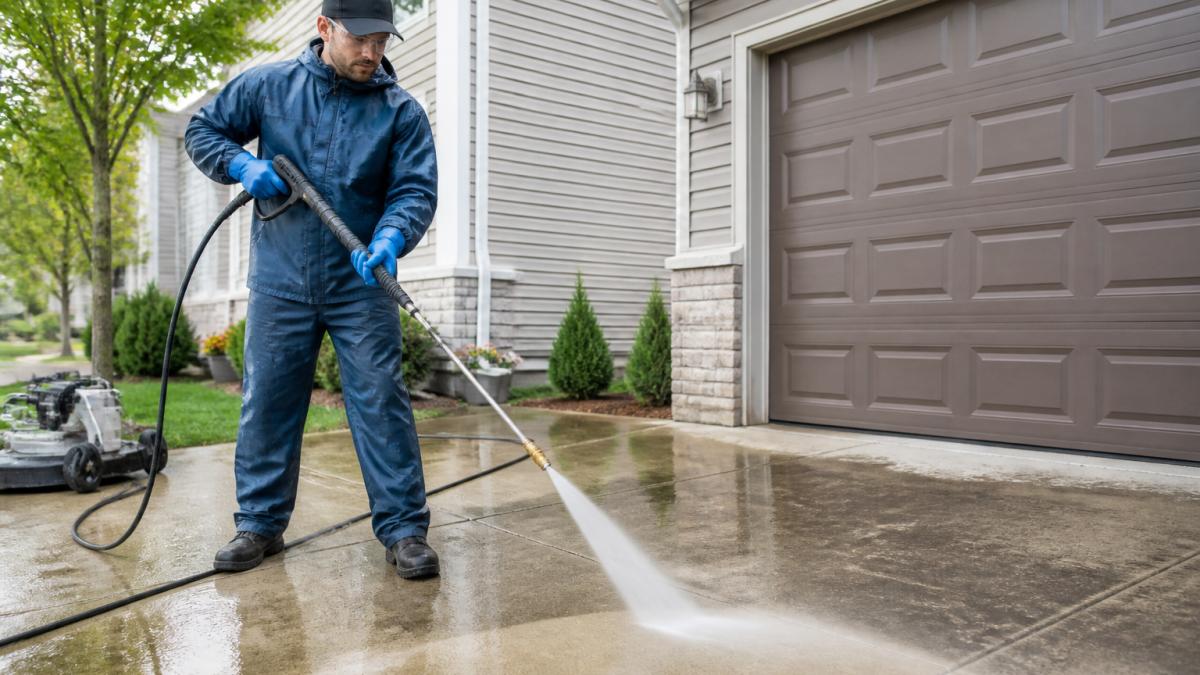
A professional pressure washing company should have clear safety protocols. This protects their team, your property, and your family.
Key safety practices include:
- Wearing protective gear (eye protection, gloves, steel-toed boots, hearing protection)
- Using appropriate pressure levels for different surfaces
- Securing the work area to prevent bystanders from entering
- Properly grounding and handling electrical equipment
Ask about their equipment: commercial-grade pressure washers are more reliable and adjustable than consumer models. Ask about their water source, a tank or your hose?
Ask how they handle water runoff, pressure washing generates significant water and debris, and a prepared contractor contains it to prevent damage to neighboring properties or storm drains.
Pressure Washing Preparation Checklist: Property Access and Surface Protection
Before the contractor arrives, ask: "What preparation do you need from me?"
Clear communication about property setup prevents delays and damage. Ask:
- Should I move vehicles or outdoor furniture?
- Do you need access to water and electrical outlets?
- Should I close windows and doors?
- What should I do with potted plants or decorations?
Discuss surface protection. Ask: "What surfaces might be at risk?" Delicate wood siding, certain stone, or painted finishes require extra care, ask whether they'll use protective coverings or adjust pressure levels, and how they'll protect nearby plants. Clarify parking and work area access in advance, and discuss the timeline and whether weather could delay work.
Red Flags and How to Decide
Walk away from contractors who exhibit these warning signs:
- Refuses to provide written estimates or proof of insurance
- Avoids answering questions about experience or credentials
- Offers a price significantly lower than other quotes without explanation
- Pressures you to decide immediately or pay upfront in full
- Has no references or online reviews
Trust your instincts. If something feels off, it probably is.
When comparing contractors, list your top candidates' licensing status, insurance verification, years of experience, reference feedback, estimated cost, and timeline side by side.
Finally, use MyProBook's local service-provider platform to simplify your search. Instead of cold-calling contractors or relying on generic online reviews, you can browse pressure washing companies in your area, compare their profiles, request multiple quotes, and see reviews from homeowners like you.
Frequently Asked Questions
What should I ask a pressure washing company before hiring them?
Ask about licensing, insurance coverage, years of experience, cleaning methods they use, equipment specifications, references from past projects, and what their written estimate includes. Request proof of general liability and workers' compensation insurance. Confirm they understand which surfaces on your property need soft washing versus high-pressure washing, and ask about their preparation process and environmental precautions. A reputable pressure washing company will answer all these questions clearly and provide documentation without hesitation.
Does a pressure washing company need insurance?
Yes. Any professional pressure washing company should carry general liability insurance to protect your property if damage occurs during the job, and workers' compensation insurance to cover their employees. Request proof of insurance before hiring—ask for a certificate of insurance that shows current coverage. This protects you legally if an accident happens on your property. Never hire a pressure washing contractor who cannot or will not provide proof of active insurance.
What is the difference between pressure washing and soft washing?
Pressure washing uses high-pressure water jets (typically 3000+ PSI) to remove stubborn dirt, mold, and stains from hard surfaces like concrete and driveways. Soft washing uses lower pressure (below 1000 PSI) combined with specialized cleaning solutions to safely clean delicate surfaces like roof shingles, siding, and painted wood without causing damage. A qualified pressure washing company will recommend the right method for each surface on your property. Asking which method they use for specific areas shows they understand surface protection.
How should I prepare my home for pressure washing?
Move outdoor furniture, toys, and decorations away from the work area. Close windows and doors, and cover any outdoor electrical outlets. Trim back landscaping that might obstruct access. Inform the pressure washing contractor about fragile plants or items you want protected. Ask them what preparation they recommend—experienced contractors will provide a preparation checklist. Confirm they'll handle any necessary tarping or protection of delicate areas. Proper preparation prevents property damage and helps the job proceed smoothly.
Hiring the right pressure washing company protects your property and saves money. Take time to verify credentials, insurance, experience, and references before signing. A contractor who's transparent about their qualifications and willing to answer detailed questions is someone you can trust with your home.