 how-to
How to Find Reliable Plumbers: A Step-by-Step Guide
Table of Contents
- Start Your Search for Reliable Plumbers
- How to Check Plumbing Trade Licenses and Credentials
- Verify Insurance, Bonding, and Professional Qualifications
- Review Customer Feedback and Service History
- Questions to Ask a Plumber Before Hiring
- How to Compare Plumbing Quotes Effectively
- Evaluate Communication, Availability, and Professionalism
- Frequently Asked Questions
Last Updated: October 2, 2026
Start Your Search for Reliable Plumbers
Finding a reliable plumber is one of the most important decisions a homeowner makes. A burst pipe, clogged drain, or water heater failure doesn't wait for convenience.
Not all plumbers are created equal. Some are licensed professionals with years of experience; others lack proper credentials or insurance.
This guide walks you through how to find reliable plumbers in your area, covering the steps that separate qualified professionals from the rest.
How to Check Plumbing Trade Licenses and Credentials
A licensed plumber has completed training, passed exams, and meets your local plumbing code standards. This is non-negotiable.
Where to verify credentials locally:
- Alberta One-Call. If your plumber is doing work near buried lines, they must contact Alberta One-Call before digging, a legal requirement. A professional plumber will know this and factor it into their estimate.
- City of Edmonton Permits and Licenses. Major plumbing work requires a city permit. Ask your plumber upfront whether your job needs one. You can check the city's website or call 311 to confirm.
- Alberta Apprenticeship and Industry Training (AIT). Verify a plumber's license status, journeyperson certification, and disciplinary history through AIT's public registry by name or license number.
- Professional associations. Plumbers who belong to organizations like the Plumbing Contractors Association of Alberta often maintain higher standards. Membership isn't required, but it's a positive signal.
What credentials mean in practice:
A licensed plumber understands Edmonton's specific plumbing code, based on the National Plumbing Code of Canada.
How to verify credentials:
- Ask for their license number and AIT registration. A legitimate plumber will provide it immediately.
- Check the AIT registry yourself. Visit the Alberta Apprenticeship and Industry Training website and search the public registry to confirm their license is active and in good standing.
- Ask about permit experience. If your job requires a city permit, ask whether they've pulled permits for similar work before.
- Look for trade certifications. Additional certifications in gas fitting, backflow prevention, or water treatment show commitment to expertise.
- Verify they understand local codes. Ask: "Are there any code requirements I should know about for this job?" A knowledgeable plumber will mention specifics relevant to your work.
A plumber without a license is a red flag. Unlicensed work often violates building codes, voids your home's warranty, and may result in insurance claim denials or city enforcement action.
Verify Insurance, Bonding, and Professional Qualifications
A licensed plumber is a start. Insurance and bonding are equally critical.
Liability insurance covers damage the plumber causes to your home during the job.
Bonding is a financial guarantee protecting you from liens on your property if the plumber doesn't complete the work or pay suppliers.
Ask for proof of both before hiring:
- Request a certificate of insurance and review the coverage limits.
- Ask about their bonding status and request a bond number and issuing company.
- Confirm the insurance is current. Ask them to email certificates directly from their insurance provider.
- Check that the coverage applies to residential work in your area.
Professional qualifications go beyond licensing. Some plumbers have completed advanced training in specialized systems like tankless water heaters or green building practices, showing ongoing commitment to their craft.
Review Customer Feedback and Service History
Past customers reveal patterns: Do they show up on time? Communicate clearly? Does the work hold up?
Start by checking multiple platforms:
- Online review sites. Look for patterns across reviews, not just the rating. Multiple complaints about the same issue, like hidden charges or poor communication, is a warning.
- Google reviews. These are harder to fake because Google verifies reviewers are real customers.
- Ask for references directly. Request contact information for 2-3 recent customers. Call and ask: Did the plumber arrive on time? Was the estimate accurate? Would you hire them again?
Look for mentions of punctuality, communication, whether the final bill matched the estimate, how unexpected issues were handled, and whether the work lasted.
A plumber with mostly five-star reviews and a few three-star reviews is normal. But consistent complaints about the same problem warrant looking elsewhere.
Questions to Ask a Plumber Before Hiring
Ask these questions:
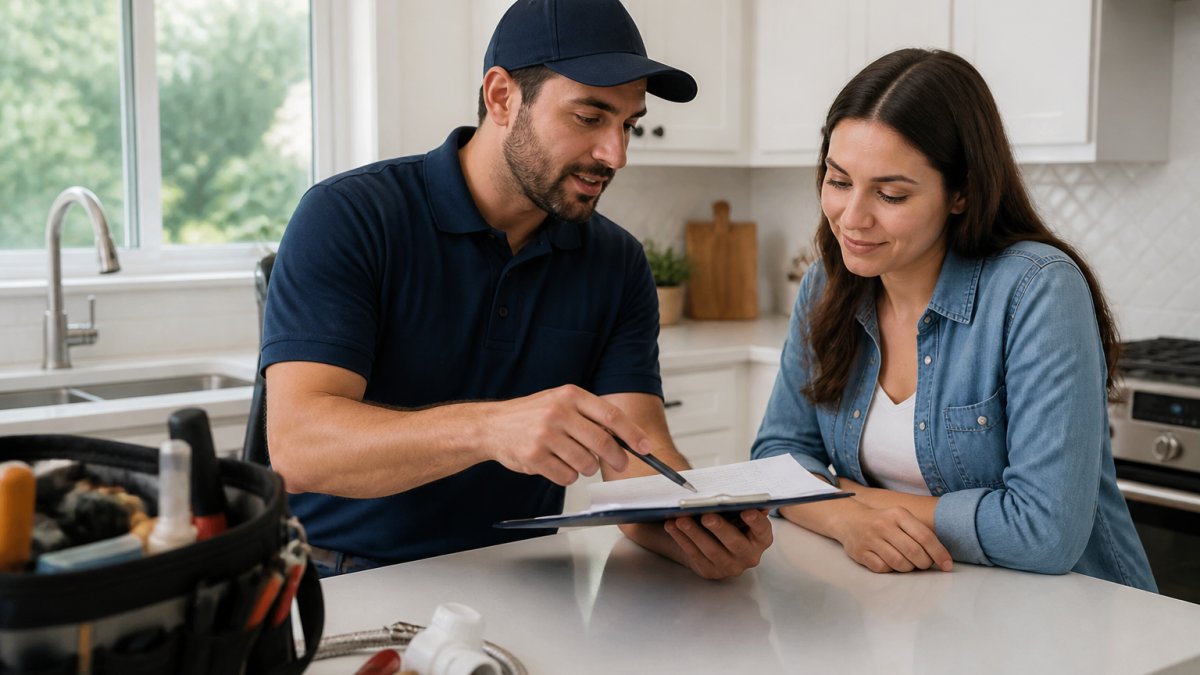
About the job: How long have you been in the trade? Have you handled this type of work before? What's your estimated timeline? Will you need to access multiple areas of my home?
About pricing and process: Do you charge by the hour or flat rate? What does your estimate include?
About the work: What materials will you use and why? Will this require a building permit? What warranty do you offer?
Connect with Professional & Reliable Plumber in Edmonton →
About communication: How do you handle unexpected issues? Who do I contact with questions? Will you provide a written invoice?
Listen to how they answer.
How to Compare Plumbing Quotes Effectively
Never hire the first plumber you call. Get multiple quotes so you can compare pricing, approach, and professionalism.
Aspect | What to Compare | Why It Matters |
|---|---|---|
Scope of work | Does each quote cover the same tasks? | Different plumbers may interpret the job differently |
Materials | What brands and quality are specified? | Cheap materials fail faster |
Timeline | When will the work start and finish? | Delays impact your home's function |
Warranty | What's covered and for how long? | Protects you if problems emerge later |
Payment terms | When is payment due? | Affects your cash flow and risk |
Get at least three quotes. Two is too few to spot pricing patterns. Three or more let you see what's typical and what's an outlier.
Watch for these patterns:
- One quote is significantly lower. Ask why before assuming it's a good deal, it may indicate corner-cutting or cheaper materials.
- One quote is significantly higher. Ask what justifies the premium, it may reflect premium materials, faster timeline, or more experience.
- Vague estimates. "Around $500" or "I'll let you know" is not a real quote. Insist on a written estimate with line items.
Compare estimates side by side. The cheapest option isn't always the best, nor is the most expensive.
Evaluate Communication, Availability, and Professionalism
Responsiveness. Did they return your call or message promptly and answer questions thoroughly?
Clarity. Can they explain the problem and solution in plain language without unnecessary jargon?
Availability. Can they fit you in within a reasonable timeframe?
Transparency. Are they upfront about what they don't know?
Post-Service Inspection Checklist
Before you pay the final invoice, inspect the completed work.
Visual inspection:
- All visible pipes and connections are secure with no leaks or moisture
- Caulking around fixtures is clean and complete
- The work area is clean; debris and packaging have been removed
- Walls or flooring that were opened have been properly patched or sealed
- Fixtures are installed straight and aligned
Functional testing:
- All taps run smoothly with consistent water pressure
- Hot water reaches fixtures within a reasonable time
- Drains empty completely with no standing water or slow drainage
- Toilets flush fully and refill properly without running continuously
- No unusual sounds from pipes when water runs
- If a water heater was serviced, hot water temperature is stable and safe
Documentation:
- You have a written invoice listing all work completed, materials used, and labour hours
- The invoice includes the warranty period (parts and labour) and what's covered
- You have any permits or inspection certificates if required by the city
- The plumber has provided contact information for warranty claims or callbacks
Before final payment:
- Ask the plumber to walk you through the work. This gives you a chance to ask questions while they're still on-site.
- If you notice anything incomplete or concerning, note it in writing and ask for clarification before paying.
- Request a written warranty specifying what's covered and for how long.
- Keep all receipts, invoices, and warranty documents for future reference.
Red flags during inspection:
- Visible leaks or moisture around new connections
- Fixtures that are loose, crooked, or don't operate smoothly
- Debris left behind or incomplete cleanup
- The plumber can't explain what was done or why
- No written invoice or warranty offered
If you spot problems before paying, address them immediately.
Frequently Asked Questions
What credentials should I look for in a professional plumber?
Look for a licensed plumber with trade certification from a recognized apprenticeship program. Ask to see their license and verify it with your provincial regulatory body. Bonded and insured status is essential—this protects you if something goes wrong. Ask whether they've completed continuing education or hold certifications in specialized areas like gas fitting or backflow prevention, depending on your needs.
How can I verify a plumber's reputation before hiring?
Check online reviews on local service-provider platforms and Google. Ask the plumber for references from recent residential clients and contact them directly. Request details about their experience with your specific issue—sewer backup, drain cleaning, water heater installation, or pipe repair. Ask how long they've been in business and whether they're part of any trade associations. A reliable plumber should have a clear track record and be willing to provide proof.
How do I know if a plumbing quote is reasonable?
Request written estimates from at least two or three licensed plumbers. Compare what's included: materials, labor, service call fee, and timeline. Ask whether the quote is a flat rate or hourly rate, and what happens if the work takes longer than expected. Ensure all estimates itemize parts and labor separately. Be cautious of quotes that are significantly lower than others—this may indicate corners being cut or hidden costs later.
What should I ask about warranties and guarantees?
Ask what workmanship guarantee the plumber offers and for how long. Request written confirmation of any warranty on parts or labor. Clarify whether the guarantee covers future issues or only defects from the initial work. Ask about the process for addressing problems after the service is complete. A reliable plumber will stand behind their work and provide documentation of all guarantees in writing.