
 how-to
How to Hire a Carpet Cleaner in Calgary: 2026 Guide
Table of Contents
- Why Hiring a Pro Beats Renting Equipment
- Step 1: Define Your Carpet Cleaning Needs
- Step 2: Research Local Carpet Cleaners
- Step 3: Questions to Ask Carpet Cleaners Before Booking
- Step 4: Compare Quotes and Services
- Step 5: Your Carpet Cleaning Preparation Checklist
- What to Expect for Average Carpet Cleaning Duration
- Conclusion
- Frequently Asked Questions
Last Updated: September 16, 2026
Why Hiring a Pro Beats Renting Equipment
Renting a carpet cleaning machine looks cheaper until you factor in drying time, water damage risk, and weaker extraction power. Learning how to hire a carpet cleaner in Calgary starts with understanding what you're paying for: the right method, the right technician, and a result that lasts.
MyProBook helps homeowners compare local carpet cleaning providers side by side, so you're not calling five companies one at a time. The platform lets you request multiple quotes, check reviews, and book directly.
Rental machines use weaker suction than truck-mounted hot water extraction units, so carpet fibers stay damp longer, inviting mold and odor. Professionals also carry pre-treatment solutions and spotting agents rentals don't include.
Here's the practical difference:
- Rental route: You haul the machine, buy or rent cleaning solutions separately, do the work yourself, and hope the carpet dries within 24 hours.
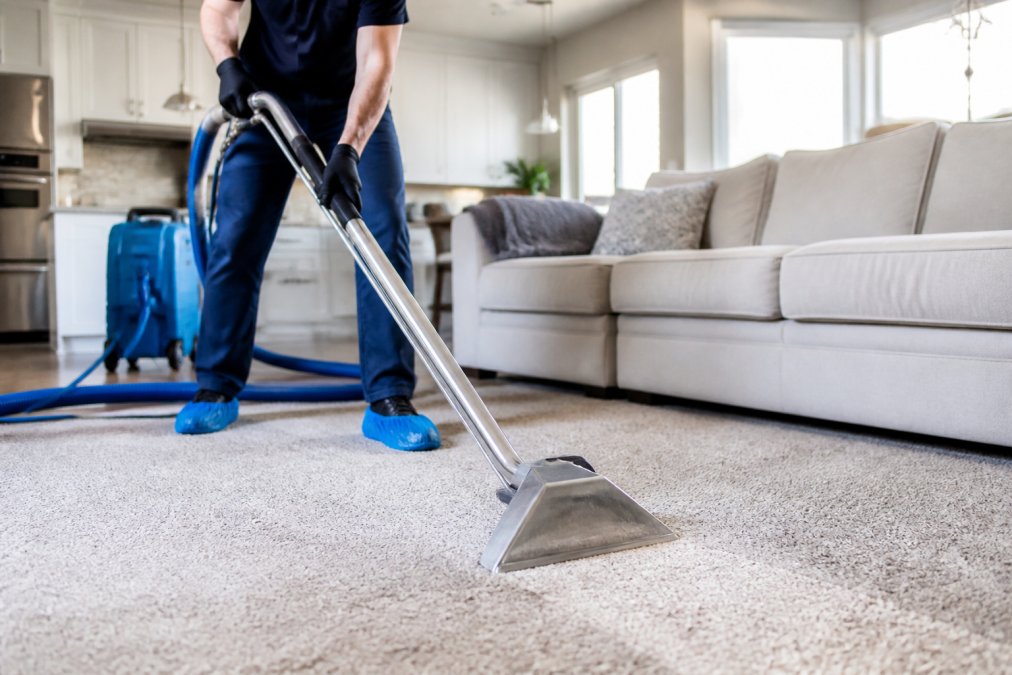
- Professional route: A licensed contractor arrives with truck-mounted or portable extraction equipment, pre-treats high-traffic areas, and finishes with a controlled dry time.
Step 1: Define Your Carpet Cleaning Needs
Before you contact anyone, write down what you actually need cleaned. This prevents overpaying for services you don't want or undershooting on square footage.
Start with a simple inventory:
- How many rooms, and roughly what square footage?
- Are there pets, and is pet odor removal part of the job?
- Do you need upholstery cleaning, rug cleaning, or mattress cleaning too?
- Are there stains that need spot treatment before a general clean?
Residential vs. Commercial Cleaning Services
Residential services focus on homes, typically using portable or truck-mounted units sized for a few rooms. Commercial cleaning covers offices, retail spaces, and rental properties, often on a recurring schedule with higher-capacity equipment.
Knowing your needs upfront also makes quotes easier to compare, since every provider prices the same scope of work.
Step 2: Research Local Carpet Cleaners
Finding reputable providers means checking more than the first search result. Look for licensed contractors with a local address, recent reviews, and clear service descriptions.
Where to look:
- A local service-provider platform that helps you find providers by service and city
- Word of mouth from neighbors and local community groups
- Provider websites with a physical local address and service area listed
A Vetting Checklist for Hiring a Carpet Cleaning Contractor
Run every candidate through the same checklist and keep the answers side by side so you can compare them fairly.
Credentials and coverage
- Business licensing: Ask for the business license number and confirm it matches the name on the quote. A mismatch is a red flag.
- Liability insurance: Request a certificate of insurance and check the effective dates. If a technician damages a wall or flooring, liability coverage stands between you and the repair bill.
- Workers' coverage: Ask whether technicians are covered by workers' compensation. If an uninsured technician is injured in your home, the consequences can land on you.
- Certification: The Institute of Inspection, Cleaning and Restoration Certification (IICRC) is the recognized standard-setting body for carpet cleaning technicians. Certification isn't mandatory, but it signals formal training in fiber identification, cleaning chemistry, and moisture control.
Equipment and method fit
- Extraction type: Truck-mounted hot water extraction delivers the strongest suction and fastest dry times; portable units suit high-rises and small jobs. Ask which they'll bring.
- Method match: Confirm the provider uses a method appropriate for your carpet. See the material compatibility notes below.
- Pre-treatment: Ask whether traffic-lane pre-treatment and spot treatment are included or billed as add-ons.
Business practices
- Written estimates: A provider who won't put scope and price in writing before the appointment is a risk. Verbal quotes cause most billing disputes.
- Reviews: Read recent reviews, not just the star rating. Look for comments about punctuality, dry time, and whether the technician honored the quoted scope.
- Hidden fees: Ask directly about trip charges, minimum job charges, stair fees, and whether the quoted price changes if the carpet is more soiled than expected.
Safety and Material Compatibility
Not every carpet can handle every method. Rental machines and even some professional units can damage the wrong fiber, so match the method to the material before you book.
Carpet Type | Safe for Rental Machines? | Notes |
|---|---|---|
Synthetic (nylon, polyester, olefin) | Generally yes | Most forgiving fiber; handles hot water extraction well |
Wool | Risky | Can shrink, felt, or bleed; needs low-moisture or dry methods and a technician experienced with wool |
Berber / loop pile | Risky | Loops can snag or unravel under a stiff brush; needs gentle agitation |
Shag / frieze | Risky | Deep pile traps moisture and takes far longer to dry; over-wetting is common |
Delicate or antique rugs | No | Should be cleaned off-site by a specialist, not in place |
If you have wool, Berber, or a delicate rug, tell every provider the fiber type when you request a quote. A provider who asks about fiber type before quoting understands the risk; one who quotes the same method for every carpet does not.
Steam Cleaning vs. Dry Cleaning Methods
Steam cleaning, or hot water extraction, injects heated water and cleaning solutions into the carpet, then extracts them along with loosened dirt. It's the deeper clean most professionals recommend for heavily soiled synthetic carpet.
Dry cleaning uses minimal moisture and specialized compounds, so carpet is walkable almost immediately. It suits delicate fibers, quick turnarounds, and commercial spaces that can't close for a day.
Method | Moisture Level | Dry Time | Best For |
|---|---|---|---|
Steam cleaning | High | Longer | Deep cleaning, high-traffic synthetic carpet |
Dry cleaning | Low | Short | Wool, delicate fibers, fast turnaround |
Neither method is universally better. The right choice depends on your carpet fibers, soil level, and how quickly you need the room back.
Step 3: Questions to Ask Carpet Cleaners Before Booking
The single most useful question is about dry time. A realistic answer tells you the provider understands their own equipment, and it lets you plan around the room being out of use.
Step 4: Compare Quotes and Services
When you compare, look past the bottom-line number:
- Scope match: Does each quote cover the same rooms and treatments?
- Method: Are they quoting steam cleaning, dry cleaning, or a mix?
- Inclusions: Is pre-treatment, spot treatment, or deodorizing included?
- Availability: How soon can they book, and does the timing work for you?
DIY vs. Professional: A Cost-Benefit Comparison
The DIY route
The professional route
Where the math actually lands
- Whole-home cleaning: The time and moisture risk scale with square footage. A full home is where DIY mistakes get expensive.
- Pet stains and odor: Pet urine penetrates the backing and underlay. Surface extraction from a rental machine rarely reaches it, and the odor returns within days.
- Wool, Berber, or delicate rugs: The risk of permanent damage outweighs any savings.
- Allergies or health concerns: Deep extraction removes more embedded allergens than a rental unit can.
- Recurring maintenance: A professional schedule keeps carpet in warranty-compliant condition and extends its usable life.
Step 5: Your Carpet Cleaning Preparation Checklist
Preparation makes the appointment faster and the result better.
What to Expect for Average Carpet Cleaning Duration
Plan for these rough blocks:
- Single room or small area: under an hour
- Two to three rooms: one to two hours
- Whole home or heavy soiling: several hours
Run a fan or open windows after a steam clean. Moving air cuts dry time and helps prevent the damp, musty smell that comes from slow drying.
If you're booking around a schedule, tell the provider your timing constraints upfront. A good technician will recommend the method that fits your turnaround.
Conclusion
Find local service providers near you and book with confidence.
Frequently Asked Questions
What questions should I ask before hiring a carpet cleaner?
Ask about their cleaning method (steam vs. dry), whether they are licensed and insured, what their pricing includes, and how long the carpets take to dry. Also ask about stain removal guarantees and if they move furniture. A reputable cleaner will answer these clearly and provide a written estimate. You can find vetted local professionals through platforms like MyProBook to compare options easily.
How long does professional carpet cleaning take?
The average carpet cleaning duration depends on the size of the area and the method used. Most residential jobs take 1 to 3 hours for a few rooms, while larger homes or commercial spaces can take longer. Steam cleaning typically requires additional drying time, around 4 to 6 hours. Ask your cleaner for a time estimate when you book so you can plan your day.
Should I move furniture before the carpet cleaners arrive?
Most professional cleaners will move small items like chairs and lamps, but larger furniture such as sofas and beds may need to be moved by you or may incur an extra fee. It's best to clear the floor of personal items and breakables. Confirm with your provider what they will handle. A preparation checklist from your cleaner can help you get ready.
How often should I have my carpets professionally cleaned?
For most homes, professional deep cleaning every 12 to 18 months is recommended. High-traffic areas, homes with pets or allergies, and rental properties may need cleaning every 6 to 12 months. Regular vacuuming and spot treatment between professional visits help maintain carpet fibers and extend the time between deep cleans.